Discovering the Hidden Gems of Marbella: A Guide to Authentic Spanish Culture and Lifestyle
“People always think of Benalmádena as a holiday destination. But for us, it’s home.”[1] That observation, offered by Sandra and Werner, a couple who have built their lives on the Costa del Sol, captures something that first-time visitors to this coastline rarely pause to consider. The same truth applies, perhaps even more powerfully, to Marbella. From the outside, Marbella is a byword for luxury: the super-yachts of Puerto Banús, the fashion boutiques of the Golden Mile, the gleaming villas overlooking an impossibly blue sea. That reputation is deserved. But it is also, in the most important sense, incomplete.
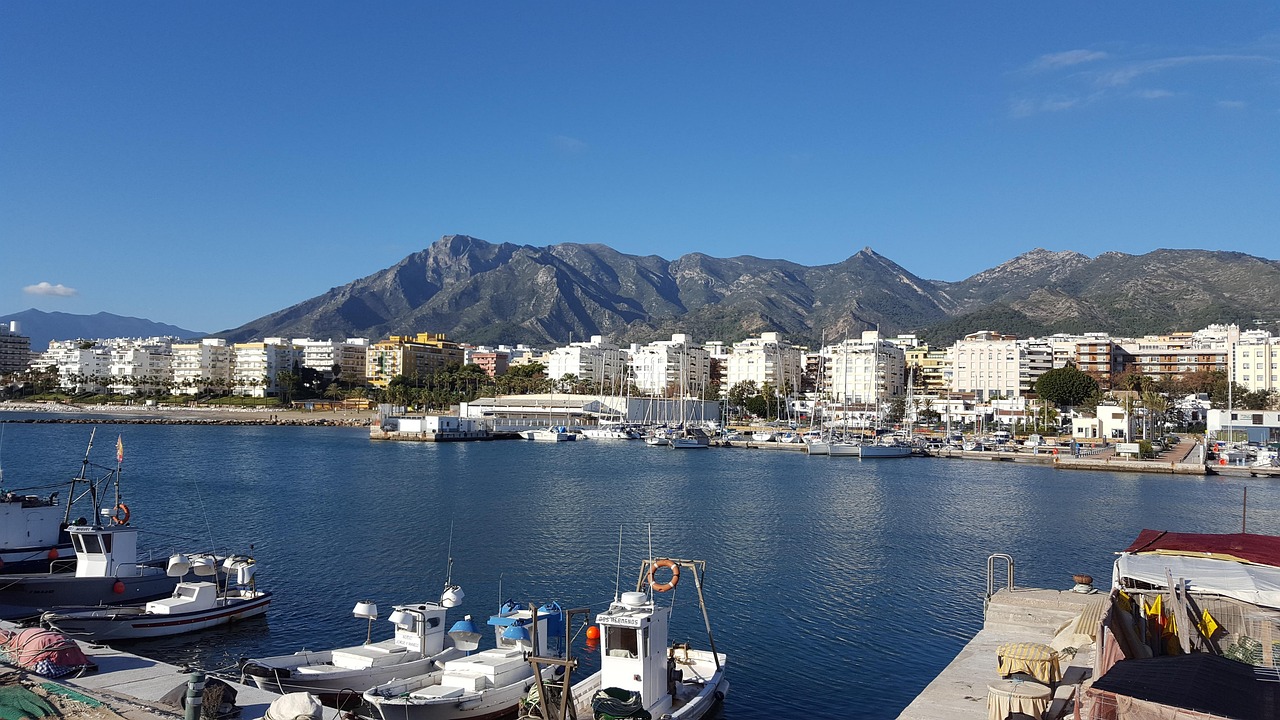
Beneath the polish and the prestige lies a city with a genuinely lived history, a warm Andalusian soul, and a local culture that rewards those willing to look beyond the obvious. For the growing number of people who are moving to Marbella not just for a second home but for a whole new chapter of life, this deeper dimension is not a footnote, it is the foundation. This guide is written for that reader: the one who wants to know not just where to buy, but how to belong.
The Old Town: Where Marbella’s True Character Lives
If there is a single place that dismantles the caricature of Marbella as a resort with pretensions, it is the Casco Antiguo, the Old Town. A labyrinth of whitewashed streets, terracotta rooftops, and flower-draped balconies, it dates back to the Moorish period and has survived several centuries of reinvention with its character largely intact. The Plaza de los Naranjos, the Square of the Orange Trees, sits at its heart, framed by 15th-century buildings and shaded by the namesake trees whose blossom scents the air each spring.
What makes the Old Town genuinely special is not that it exists, but that it is used. On weekday mornings, elderly residents occupy the same café tables their grandparents favoured. Local families share long lunches that stretch into the afternoon. The tapas bars here, small, often family-run, with handwritten menus and no English translation in sight, are the kind of establishments that reward curiosity and a willingness to point at the dish someone else is eating.
A useful instinct to develop early: a simple, reliable indicator of quality is whether a venue is busy with Spanish locals.[2] The tourist traps are easy to identify by their bilingual menus laminated in plastic and their absence of locals. The places worth returning to are often the noisiest, the most unremarkable in appearance, and the most consistently full.
Tapas Culture and What It Really Means
In Marbella, as across Andalusia, tapas is not a cuisine, it is a social structure. The tradition of sharing small plates over a glass of chilled fino or a cold beer is the architecture around which friendships, families, and communities are built. For newcomers, engaging with it properly, that is, eating late, ordering slowly, and allowing the evening to unfold without agenda, is one of the most direct routes into local life.
Several bars in the Old Town and in the surrounding neighbourhoods of Huerta Belón and La Trinidad still serve the traditional Andalusian tapas: gambas al ajillo (prawns in garlic), berenjenas con miel (fried aubergine with honey), carrillada (slow-braised pork cheek). These are not heritage recreations for tourists. They are simply what people eat, and have always eaten, here.
Beyond the Golden Mile: Neighbourhoods That Reward Exploration
Marbella’s luxury identity is concentrated in certain well-known corridors, the Golden Mile, Nueva Andalucía, Sierra Blanca, and those areas earn their reputations. But the city’s cultural geography is considerably richer than its headline postcodes suggest.
San Pedro de Alcántara
A few kilometres west of Marbella’s centre, San Pedro de Alcántara has undergone a quiet but significant transformation over the past decade. Its seafront promenade, the Paseo Marítimo, stretches for several kilometres and has become one of the most pleasant evening walks on the coast, flanked by good restaurants and backed by a low-rise residential town that feels genuinely Spanish in rhythm and character.
San Pedro retains a strong local identity. Its Thursday market draws residents from across the municipality. Its town square sees the full social life of a working Andalusian town, from school runs to evening paseos (strolls). For families relocating to Marbella with an eye on long-term integration, this area consistently offers something the more exclusive enclaves cannot: the everyday texture of Spanish community life.
Ojén and the Mountain Villages
Twelve kilometres inland from Marbella, the whitewashed village of Ojén sits in the foothills of the Sierra de las Nieves, a UNESCO Biosphere Reserve, and represents something altogether different from the coastal experience. At an altitude of roughly 370 metres, it looks out over the Mediterranean with the unhurried clarity of a place that has never quite been discovered by the mass market.
The surrounding mountains offer serious hiking, mountain biking, and birdwatching, with trails that connect across to Ronda and the spectacular interior of Andalusia. For those drawn to natural beauty alongside the social advantages of coastal living, this inland dimension of Marbella’s geography is genuinely underappreciated. Inland locations across Spain more broadly are recognised for offering a more authentic lifestyle and a fundamentally different relationship with the landscape,[3] and the villages immediately surrounding Marbella exemplify this perfectly.
Cultural Life: Art, Music, and the Rhythm of the Year
Marbella’s cultural calendar is richer and more varied than its reputation might suggest. The Centro Cultural Pablo Ruiz Picasso, named in honour of the painter born in nearby Málaga, hosts rotating exhibitions throughout the year, alongside concerts and cultural events that draw a genuinely local audience. The Municipal Auditorium stages regular classical music performances, and the summer months bring outdoor cinema, flamenco festivals, and the Feria de Marbella, an annual fair that transforms the town into a spectacle of equestrian tradition, music, and communal celebration.
Flamenco deserves particular attention. It is not a performance art invented for tourists, it is a living tradition rooted in the Gypsy communities of Andalusia, with a formal canon of palos (styles) that have evolved across centuries. To encounter genuine flamenco in Marbella, one must look beyond the tourist tablaos and seek out the local peñas flamencas, social clubs dedicated to the art form, where performers and audiences share an intimacy that cannot be manufactured.
Markets and the Pace of Local Commerce
Understanding a place often begins at its market. Marbella’s municipal market on Calle Jacinto Benavente operates daily and offers the full range of fresh produce, fish, and meat that forms the basis of Andalusian cooking. Arriving early, before nine in the morning, is to witness the city in its most functional and most authentic state: traders setting up, chefs making their selections, locals exchanging the compressed social intelligence of a community that has known itself for generations.
Several weekly outdoor markets operate across the municipality. Each has its own character: some lean artisan and international, others are firmly local affairs. Visiting several over time, rather than treating one as definitive, is the better approach to understanding the full social breadth of where you are considering living.
The Northern Estates Perspective on Authentic Integration
In our experience working with clients who have made a permanent or long-term move to Marbella, the ones who settle most deeply and happily are almost always those who approached the move as a full cultural commitment rather than a lifestyle upgrade. The property is, of course, the foundation, and we give it the careful attention it deserves. But the conversations that matter most, and the ones we find most rewarding, are often the ones about how people want to live.
This is why we think carefully about neighbourhood fit alongside property specification. A family who want their children to grow up bilingual and engaged with Spanish culture will find a different part of Marbella most suited to them than a couple who want maximum privacy and the proximity of the golf courses of Nueva Andalucía. Neither preference is more sophisticated than the other, but getting the match right makes an enormous difference to how a life in Marbella actually unfolds.
We also hold that a good relocation is never just about the first six months. The ‘whole life’ move, which considers long-term infrastructure, community, schools, and the kind of life that works not just on arrival but years into residency, is the framework that shapes how we think about every client’s situation.[4] The hidden gems described in this guide are not incidental extras. They are the fabric of the life itself.
Natural Marbella: Mountains, Sea, and the Spaces Between
The Sierra de las Nieves, which achieved UNESCO Biosphere Reserve status, begins almost immediately above the city and contains ecosystems ranging from Mediterranean scrub to pinsapo fir forest, a species that has survived since the Tertiary period and is found almost nowhere else in Europe. The hiking trails that begin within twenty minutes of the seafront are of a seriousness and beauty that most people arriving from northern European cities find genuinely surprising.
At sea level, the coast between Marbella and Estepona contains stretches of beach that have been spared the urbanisation that defines much of the Costa del Sol. The beaches at Río Verde, Guadalmina, and Cabopino retain a natural character that rewards those who seek them out. Cabopino, with its fringe of protected dunes and its small marina, has the feel of a place deliberately preserved from excess, which, in part, it has been.
The proximity of all of this to the city centre is one of Marbella’s most underappreciated qualities. Mountain and sea, culture and community, the traditional and the contemporary, they are not in tension here. They are neighbours.
Arriving as a Resident, Not a Tourist
There is a meaningful difference between visiting a place and deciding to understand it. The practical advice for those making that transition is simple: eat where the locals eat, learn the rhythms of the week (Sundays belong to families; late evenings belong to conversation), take the time to learn even rudimentary Spanish, and allow the city to reveal itself gradually rather than demanding it perform for you immediately.
Marbella has been shaped by thousands of years of successive cultures, Phoenician, Roman, Moorish, and Andalusian, and the traces of each are present in the architecture, the food, the social customs, and the landscape. That depth does not reveal itself in a week or even a month. It rewards patience, curiosity, and a genuine commitment to being somewhere rather than simply passing through it.
This is, ultimately, what distinguishes a home from a holiday. And for those who arrive in Marbella with an open mind and a genuine interest in its culture, that distinction reveals itself with remarkable speed.
Finding Your Marbella
The Marbella most people know from photographs and reputation is real, beautiful, and worth every word that has been written about it. But it is the Marbella of the Old Town at seven on a Tuesday morning, of the mountain trails above Ojén at dusk, of the tapas bars where nobody speaks English and the food is extraordinary, that is the Marbella that becomes home.
Choosing to live here is not simply a property decision, however significant that decision may be. It is a choice about the texture of daily life, the community you will become part of, and the culture you will allow to shape you. For those who make that choice with open eyes and genuine curiosity, Marbella offers something genuinely rare: a city of international stature that has preserved, beneath its glamour, an authentic Spanish soul.
That is precisely what we help our clients find, not just the right property, but the right life.
If you are exploring a move to Marbella and would like to speak with someone who knows the city in the depth this decision deserves, we would welcome the conversation. Contact the Northern Estates team for a private, no-obligation discussion about what your life here could look like.
Sources
[1] Costa Property Podcast, ‘Living on the Costa del Sol: Sandra and Werner’, 21 July 2026.
[2] Costa Property Podcast, ‘The Local Test for Dining on the Costa del Sol’, 21 July 2026.
[3] Spain Property Guides, ‘Buying Inland: Spotlight on Andalusia, Murcia and Valencia’, 9 July 2026. Available at: https://www.propertyguides.com/spain/news/buying-inland-spotlight-on-andalusia-murcia-valencia
[4] Costa Property Podcast, ‘The Whole Life Move: Evaluating Property for Long-Term Living’, 23 June 2026.
Meta description: Discover the authentic side of Marbella, from its Old Town tapas bars to the Sierra de las Nieves, with Northern Estates’ guide to genuine Spanish culture and lifestyle.
[Image alt text: Whitewashed streets of Marbella’s Old Town with terracotta rooftops and flower-draped balconies in the afternoon sun]
[Image alt text: View of the Mediterranean from the mountain village of Ojén, above Marbella, at dusk]
[Image alt text: Fresh produce on display at Marbella’s municipal market in the early morning]
[Internal link: Guide to Marbella’s Key Neighbourhoods]
[Internal link: The Complete Relocation Guide to Marbella]